5
Plan and prioritise effectively
Going into your new role knowing how to plan your time and prioritise your tasks effectively is a skill that will not only help you feel calmer and more in control, but is highly likely to impress your boss too.
Be productive, not busy
When people start a new job, they often think that being successful means being busy all the time. However, being busy and being productive are not the same thing.
Being busy means:
- Constantly having something to do
- Jumping between tasks with no real strategy
Being productive means:
- Prioritising tasks effectively
- Making progress towards the most important goals
The most effective employees learn how to focus on what matters most. Taking their list of tasks and organising them so they are doing the right tasks at the right time.
How to plan and prioritise
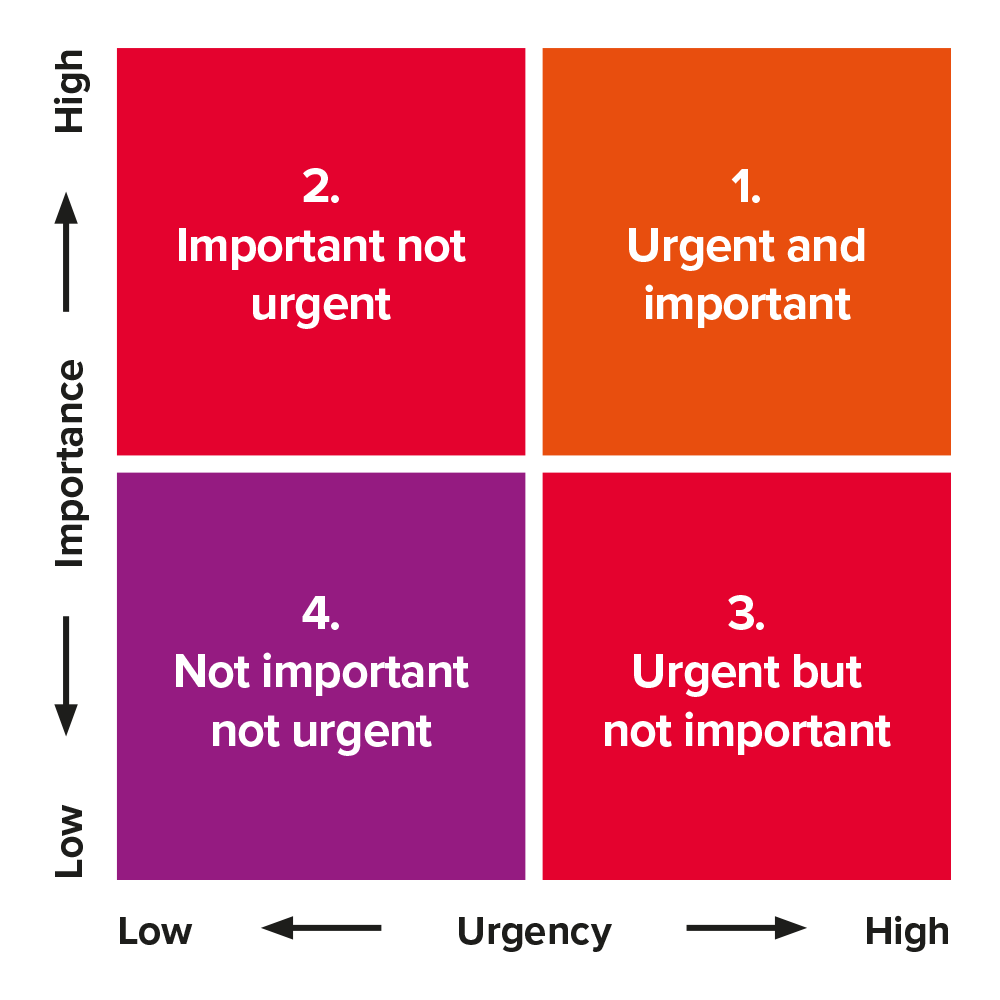
One useful tool for helping you decide where to focus your attention is the Important vs Urgent Matrix, (also known as the Eisenhower Matrix).
- At the beginning of your week, draw a cross in a notebook or on a piece of paper to divide it into four sections. Each section provides a space to list tasks that correspond to how important and urgent they are, as shown below.
- For every task you have to do, rate it on how important it is and how urgent it is.
- Add the task to the corresponding box.
- Every day that week, focus on the tasks in order:
- Urgent and important e.g. complete stock count before closing, help a customer with a complaint
- Important, not urgent e.g. complete customer service training, learn how to use the till more efficiently
- Urgent but not important e.g. respond to non-urgent messages, help with a low-priority task for a colleague
- Not important and not urgent e.g. scrolling social media, watching random videos online
- If you aren't able to deliver on the tasks in boxes 1 and 2, you should ask for some support.
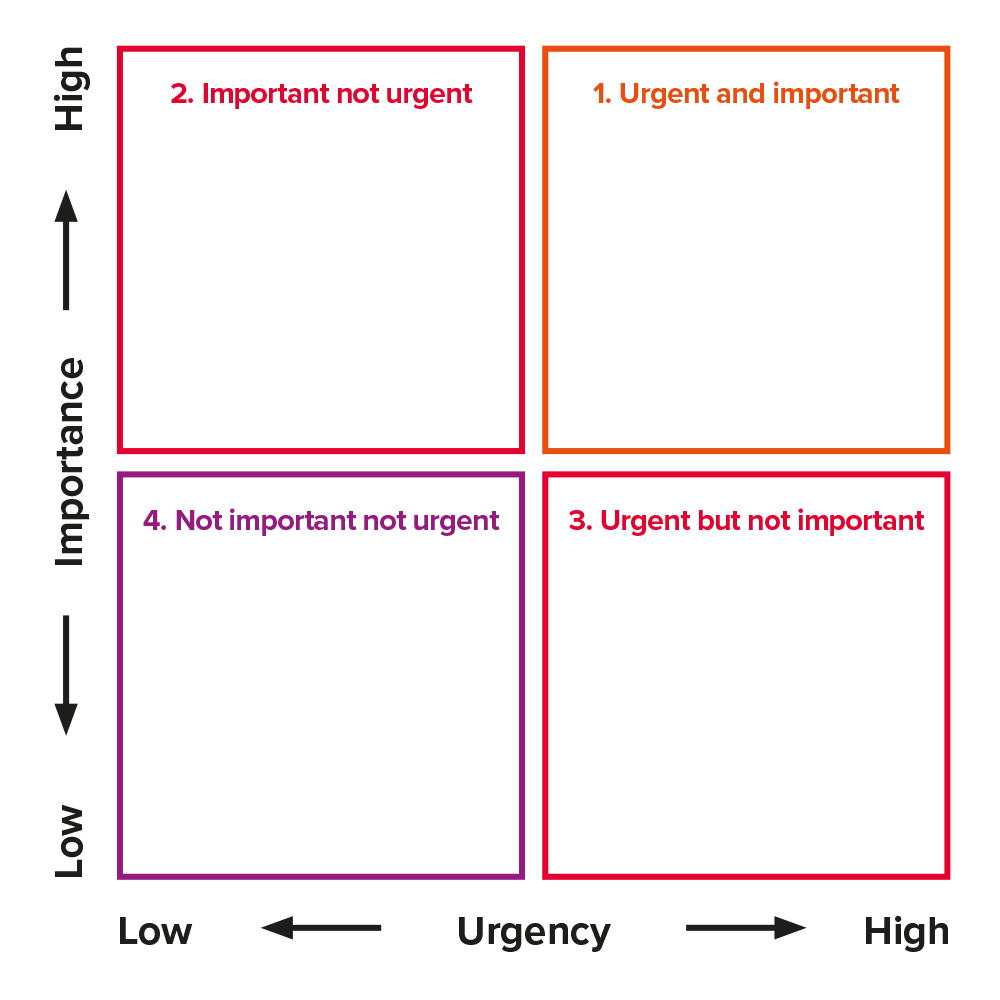
Activity: Prioritising your to-do list
Copy a matrix like the one below onto a piece of paper. Think of the everyday tasks you have to do this week. Make a list and then sort them into your matrix.
This is good practice ahead of starting a new role, where your matrix should just focus on your workplace tasks.
Introduction
1
2
3
4
5
6
Conclusion